


Table of Contents
- What are the best AI recruiting tools for franchise staffing?
- What counts as an AI recruiting tool for a staffing franchise
- Why franchise staffing needs a different kind of AI
- What to look for: a buyer's checklist
- How Whippy compares to other AI recruiting platforms
- How Whippy supports staffing agency franchises
- Rolling out AI recruiting tools across a franchise network
- Real results from Whippy customers
- The bottom line
- Ready to see it in action?
- FAQ
Try Whippy for Your Team
Experience how fast, automated communication drives growth.
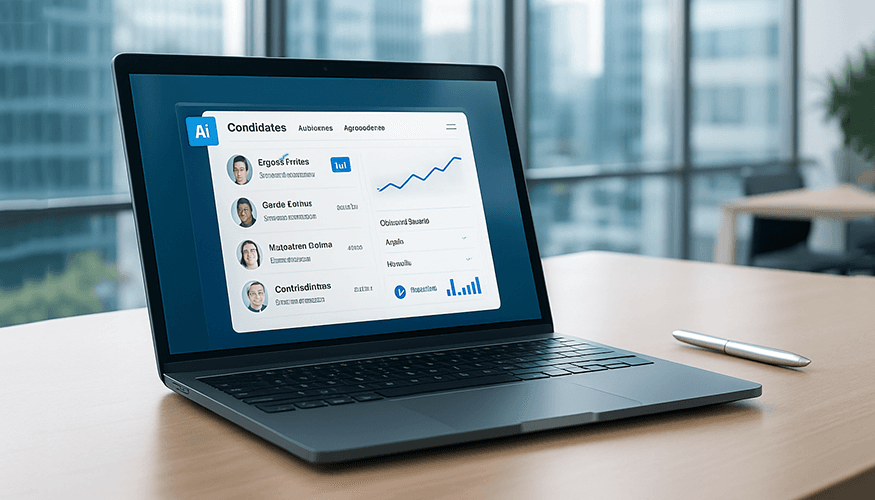
Running one staffing office is hard enough. Running a staffing agency franchise with a dozen branches, each with its own recruiters, its own local labor market, and its own way of doing things, multiplies every problem you already have. Job seekers apply at 9 p.m. and hear nothing until Monday. One branch answers candidates in minutes; another takes three days. Interview scripts drift, scoring gets inconsistent, and corporate has no real visibility into what's happening branch by branch until the numbers show up in a quarterly report.
The scale of what's at stake is bigger than most networks realize. The U.S. franchise sector is projected to reach roughly 845,000 establishments in 2026, employing nearly 8.9 million people, according to the International Franchise Association. Every one of those locations is competing for the same shrinking pool of available workers, often against other branches in the same network.
That gap between how fast candidates move and how fast your branches can respond is where placements are won or lost. AI recruiting tools exist to close it.
What are the best AI recruiting tools for franchise staffing?
The best AI recruiting tools for franchise staffing agencies standardize candidate screening, interview scheduling, and follow-up communication across every branch, while still connecting to the applicant tracking systems each location already uses. Instead of every office improvising its own process, a shared AI layer keeps quality and speed consistent, no matter which branch a candidate applies to.
That's the short answer. Here's what it actually takes to get there, and why franchise staffing is a genuinely different problem from single-location recruiting.
What counts as an AI recruiting tool for a staffing franchise
An AI recruiting tool is software that takes over a specific, repeatable part of the hiring conversation, engaging candidates, screening them, scheduling interviews, following up, so recruiters spend their time on judgment calls instead of logistics. In a franchise network, the tool has to do that consistently across every branch, not just in the flagship office. Whippy's staffing solution is built around exactly that requirement.
That's a different bar than most ai recruitment tools on the market clear. A single-location agency can get away with a point solution bolted onto its ATS. A franchise can't, because the moment one branch configures its own screening questions and another doesn't, candidate experience stops being consistent and the shared brand starts to feel inconsistent too. This shift is already well underway industry-wide: just over half of organizations now use AI to support their recruiting efforts, according to SHRM's 2025 Talent Trends research, and franchise networks that standardize this early tend to avoid the patchwork adoption that makes later rollouts harder.
The strongest ai recruiting tools for this environment sit between the ATS and every channel a candidate might use to reach out (SMS, voice, web forms, career pages) and keep that experience uniform while still leaving room for a branch manager to adjust for a local market. For a broader look at how this category of software has evolved, see this overview of AI software for staffing and recruiting firms. Franchise networks with more specialized, one-off workflow needs may want a more customizable ai recruiter tools setup; franchise staffing specifically needs standardization first, customization second.
Why franchise staffing needs a different kind of AI
Office-based hiring platforms were built for scheduled interviews weeks out and a single hiring manager reviewing a manageable stack of resumes. Franchise staffing looks nothing like that. Four problems show up again and again across multi-branch networks, and each one has a specific AI fix:
CHALLENGE | WHY IT HURTS A FRANCHISE | THE AI FIX |
|---|---|---|
Branch variability | Different messaging, scoring, and communication practices erode the shared brand and candidate trust | Shared templates and a common scoring rubric, with room for local overrides |
Recruiter coverage gaps | Candidates who apply after hours get no response until the next business day, and strong candidates move on | An always-on layer that engages candidates immediately and hands off to a recruiter when one's available |
High-volume sourcing | Dozens of applications per branch per day overwhelm manual review, burying strong candidates | Automatic triage and ranking by role fit instead of keyword matches on a job title |
Fragmented systems | Candidate data scattered across spreadsheets and inboxes leaves corporate with no real visibility | One system of record synced across every branch, not five disconnected ones |
Each of these is worth a closer look. For a side-by-side look at what changes when a franchise makes this shift, see this before-and-after comparison of manual versus AI-driven recruiting.
Branch variability puts the shared brand at risk
Every branch has its own rhythm. Some recruiters have run the same territory for a decade and know exactly how to close a candidate; others are three weeks into the job and still learning the script. Left alone, that produces different messaging, different scoring standards, and a candidate experience that depends entirely on which office happens to answer the phone.
The fix isn't stripping branches of flexibility, it's giving every location the same starting template (interview questions, scoring rubric, follow-up cadence) with room to adjust for local realities. That combination, centralized standard plus local flexibility, is the single biggest differentiator between ai based recruiting tools built for franchises and generic recruiting software repurposed for the job.
Recruiter coverage has gaps that cost placements
Candidates don't apply on a schedule. A job seeker filling out an application at 10 p.m. on a Friday, when your busiest branch is asleep and your quietest branch is fully staffed, is exactly the kind of mismatch that costs a placement. SHRM's own research puts the average time to fill a position at roughly 33 days across industries, and every day a strong candidate sits unanswered is a day closer to them accepting an offer somewhere else.
An always-on layer that can answer FAQs, run an initial screen, and hand off to a human recruiter the moment one is available closes that gap without requiring every branch to staff nights and weekends. This is the exact problem after-hours recruiting automation is built to solve.
High-volume sourcing overwhelms manual review
Franchise staffing agencies routinely see dozens of applications land in a single day per branch. Multiply that across a ten- or twenty-branch network and manual resume review simply cannot keep pace. Candidates who would have been a strong fit get buried under volume, and time-to-hire stretches out while recruiters play catch-up.
AI recruiting sourcing tools solve the volume problem by triaging and ranking applicants automatically, based on the requirements of the specific role rather than keyword matches on a job title, so recruiters spend their attention on the shortlist instead of the stack. This kind of recruitment process automation for high-volume hiring is what keeps a franchise network from drowning in its own applicant flow during a busy season.
Fragmented systems hide what's actually happening
When candidate data lives across a patchwork of spreadsheets, inboxes, and disconnected tools, corporate loses visibility into which branches are performing and which are struggling, and recruiters lose the full picture of where a candidate actually stands. A staffing agency franchise that wants headquarters and branch managers looking at the same numbers needs one system of record, not five. The stakes are real: the 2025 temporary and contract staffing industry saw a 376% turnover rate, according to the American Staffing Association, which means the volume of re-hiring and re-engagement a franchise handles in a given year is often larger than its headline headcount suggests, and fragmented systems make that churn even harder to manage well.
What to look for: a buyer's checklist
When franchise operators go looking for the best ai tools for recruiters, it's easy to get pulled into a features arms race. What actually separates a platform that works for a multi-branch network from one that doesn't comes down to five things:

Centralized templates with local overrides. Screening questions, interview scripts, and follow-up messages should start from one standard and allow branch-level adjustment, not the other way around.
Always-on candidate engagement. Look for ai tools for recruiting that can hold a real conversation with a candidate outside business hours, not just send a canned auto-reply. This matters even more once applicant volume climbs, which is where dedicated high-volume recruiting software earns its place in the stack.
Transparent, consistent scoring. A hiring rubric that applies the same criteria across every branch matters more for franchises than almost any other feature, because it's what keeps the brand experience fair and defensible. Third-party validation helps here too. Whippy's AI Recruiter, for example, has gone through bias-audit certification from Warden AI.
Real ATS and ecosystem integration. Whatever system your branches already run on, from Bullhorn to Crelate, the tool needs to sync candidate status and communication history without manual re-entry. Check the specific integrations a platform supports before you commit to it.
Network-level reporting. Corporate needs a single dashboard that rolls branch activity into one view: time-to-hire, pipeline health, and where candidates are dropping off, without waiting for someone to compile a spreadsheet.
Franchise leaders evaluating ai driven recruitment tools should treat this checklist as a filter, not a wish list. A platform that nails all five will outperform one with a longer feature list but weaker consistency across branches.
How Whippy compares to other AI recruiting platforms
Franchise operators researching this category will run into a handful of respected names. TextUs is widely used for high-volume, two-way SMS with deep ATS logging, and it's a strong fit for teams that mainly need reliable, high-throughput texting. Sense has built a strong reputation for enterprise candidate engagement journeys across SMS, WhatsApp, and email, particularly for large single-brand organizations with dedicated implementation teams. Grayscale takes a lighter-weight approach, layering messaging directly on top of an existing ATS through a browser extension, which appeals to recruiters who want to stay inside the tool they already use.
Each of these solves a real problem well. Where Whippy differs is in how much of the actual candidate conversation the AI runs on its own, screening, scoring, and scheduling, rather than mainly optimizing message delivery or requiring a recruiter to stay in the loop for each step, and in how the platform is built around one shared standard that a franchise network can apply across every branch. For a franchise choosing between these approaches, the right answer often depends on team size, how much of the conversation you want AI handling end to end, and whether standardizing across multiple locations is the primary goal.
ⓘ TextUs, Sense, and Grayscale are trademarks of their respective owners. References to these platforms reflect publicly available information and are provided for informational comparison purposes only; Whippy is not affiliated with or endorsed by these companies.
How Whippy supports staffing agency franchises
Whippy was built around a simple premise: a franchise staffing company shouldn't have to choose between consistency and speed. Every branch gets the same underlying AI layer, configured once at the network level, so a candidate applying in one city gets the same quality of response as a candidate applying in another.
In practice, that means AI agents built for high-volume hiring handle the parts of the hiring conversation that used to depend on which recruiter picked up the message: initial screening questions, interview scheduling, and post-interview follow-up. When a candidate finishes a screening call, Whippy generates a structured summary of the conversation, scoring their answers against the role's requirements using the same rubric every branch uses. Here's what that looks like in practice, a real scoring summary generated right after an automated screening call:

That consistency carries through to the moments after an interview, too. Rather than leaving a candidate wondering whether they'll hear back, an automated, branded message goes out immediately, confirming next steps and keeping them engaged instead of drifting toward another opportunity. Below is an example of that automated follow-up message as a candidate would actually see it:

None of this replaces recruiters. It removes the repetitive parts of their day (chasing schedules, sending the tenth reminder, re-typing the same screening notes) so they can spend their time on the conversations that actually close placements: building trust with a candidate, negotiating with a client, coaching a newer recruiter on a tricky req.
Franchise networks that draw from diverse candidate pools across different branches also benefit from built-in multilingual AI voice recruiting, which keeps the same standard of communication whether a candidate prefers English, Spanish, or another language.
For headquarters, that same layer rolls up into network-wide visibility: which branches are converting fastest, where candidates are stalling, and how time-to-hire compares across the territory, all from one dashboard instead of a dozen disconnected reports. Here's a snapshot of that reporting view, showing exactly the kind of network-level data a franchise operator would check week to week:

And because Whippy connects to the ATS platforms staffing franchises already run on through its own integrations, including Bullhorn, Crelate, and Indeed, adopting it doesn't mean ripping out the system of record each branch has already built its workflow around.
Rolling out AI recruiting tools across a franchise network
Franchises that get the most out of an ai recruiting tool roll it out in stages instead of flipping every branch on at once. A practical sequence looks like this:
- Set the network standard first. Lock in shared screening criteria, interview scripts, and a scoring rubric before turning anything on, so every branch starts from the same baseline.
- Connect the systems of record. Sync the AI layer with each branch's ATS and calendar so candidate data flows one direction instead of living in two places.
- Turn on screening and scheduling. Let AI handle the first conversation with new applicants and the back-and-forth of booking interview slots, while recruiters focus on qualified candidates further down the funnel.
- Expand into sourcing and outreach. Once the fundamentals are running smoothly, extend the AI layer into proactive outreach to passive candidates and re-engagement of your existing database.
- Review the network dashboard and adjust. Use branch-level data to see where the rollout is working and where scoring criteria or messaging needs a second look, then expand to remaining branches with those lessons built in.
The specific configuration will vary by network size, ATS, and how many roles each branch is filling in a given month. The point of a phased rollout isn't the exact sequence, it's giving each branch time to trust the system before depending on it for its full applicant flow.
Real results from Whippy customers
Numbers from real deployments make the case better than any feature list. These are three separate customers, each running Whippy on a different ATS and at a different scale, drawn from Whippy's customer stories.
CUSTOMER | SYSTEM USED | WHAT CHANGED | RESULT |
|---|---|---|---|
Multi-branch staffing firm | Avionté | Automated screening, call handling, and candidate engagement inside the existing ATS | Under 5 minutes response time, 80% of screenings completed, 15 unnecessary hires avoided, close to $1 million in annual savings |
CCS Staffing | Whippy AI Agents | Replaced its sourcing team with AI-driven candidate outreach | $1.64 million in annual savings |
Link Staffing (Texas) | TempWorks | Always-on, multilingual voice and SMS screening, follow-up, and interview scheduling | Over 2,500 interviews run monthly at roughly $2 each, a 95% drop in interview costs, and 45 minutes saved per candidate |
Results like these aren't guaranteed for every network. They reflect what happens when a staffing franchise commits to the same standard across every branch, rather than treating AI as a tool one office tries out on its own.
The bottom line
Winning as a staffing agency franchise takes more than the surface-level feature comparisons in a typical "top AI recruiting software" roundup. What actually moves the needle is a platform built for the specific tension every franchise lives with: keeping every branch on-brand and consistent, while still moving fast enough to win candidates before a competitor does.
The franchise staffing companies that get this right treat AI recruiting tools as network infrastructure, not a branch-by-branch experiment. That's the difference between a faster hiring process at one location and a faster, fairer, more consistent hiring process across the whole territory.
Ready to see it in action?
Request a demo and we'll walk through how Whippy handles screening, scheduling, and reporting for a network your size, using your ATS and your branch structure.
Request a demo →
FAQ
Q: What is an AI recruiting tool for franchise staffing?
A: It's software that automates the repetitive parts of hiring, screening, interview scheduling, and follow-up, consistently across every branch in a franchise network, while syncing with each location's existing ATS so no branch has to change its system of record.
Q: How do AI recruiting tools handle multiple branch locations?
A: The strongest platforms apply one shared standard (screening questions, scoring rubric, messaging templates) across the whole network, while still letting individual branches adjust for their local labor market. That balance of centralized consistency and local flexibility is what separates a franchise-ready tool from a generic one.
Q: Will AI recruiting tools replace recruiters in a staffing franchise?
A: No. They take over the repetitive logistics of hiring so recruiters can spend their time on the parts of the job that require judgment: building relationships with candidates and clients, and closing placements. Recruiters stay in the loop for anything that needs a human decision.
Q: How fast can a staffing agency franchise see results from AI recruiting tools?
A: Most networks see measurable movement in time-to-hire within the first few weeks of rollout, once screening and scheduling are automated and recruiters are freed up to focus on qualified candidates instead of logistics. Full network-wide results typically build over the following one to two quarters as more branches come online.
Q: What should I look for in AI based recruiting tools for a multi-location network?
A: Prioritize centralized templates with local overrides, always-on candidate engagement, consistent scoring, real ATS integration, and network-level reporting. A longer feature list matters less than consistency across every branch.
Q: Do AI driven recruitment tools integrate with existing ATS platforms?
A: Yes, and this should be non-negotiable. Look for direct integration with the ATS platforms your branches already run, such as Bullhorn, Crelate, or Indeed, so candidate data and communication history sync automatically instead of requiring manual re-entry at each location.
Table of Contents
Table of Contents
- What are the best AI recruiting tools for franchise staffing?
- What counts as an AI recruiting tool for a staffing franchise
- Why franchise staffing needs a different kind of AI
- What to look for: a buyer's checklist
- How Whippy compares to other AI recruiting platforms
- How Whippy supports staffing agency franchises
- Rolling out AI recruiting tools across a franchise network
- Real results from Whippy customers
- The bottom line
- Ready to see it in action?
- FAQ
Try Whippy for Your Team
Experience how fast, automated communication drives growth.

Related Articles

AI Call Center Solutions: The Complete Guide
 Elizabeth Long
The Staffing Operating System for Avionté
Elizabeth Long
Automated License Verification for Staffing Agencies
Elizabeth Long
Write Job Descriptions That Make AI Recruiters Perform
Elizabeth Long
The Candidates You Need Are Already in Your ATS
Elizabeth Long
Payroll Communication for Staffing Agencies
Elizabeth Long